
Waterproofing: The Part of Your Bathroom You'll Never See
By Harley Newton · Jul 4, 2026 · 4 min read
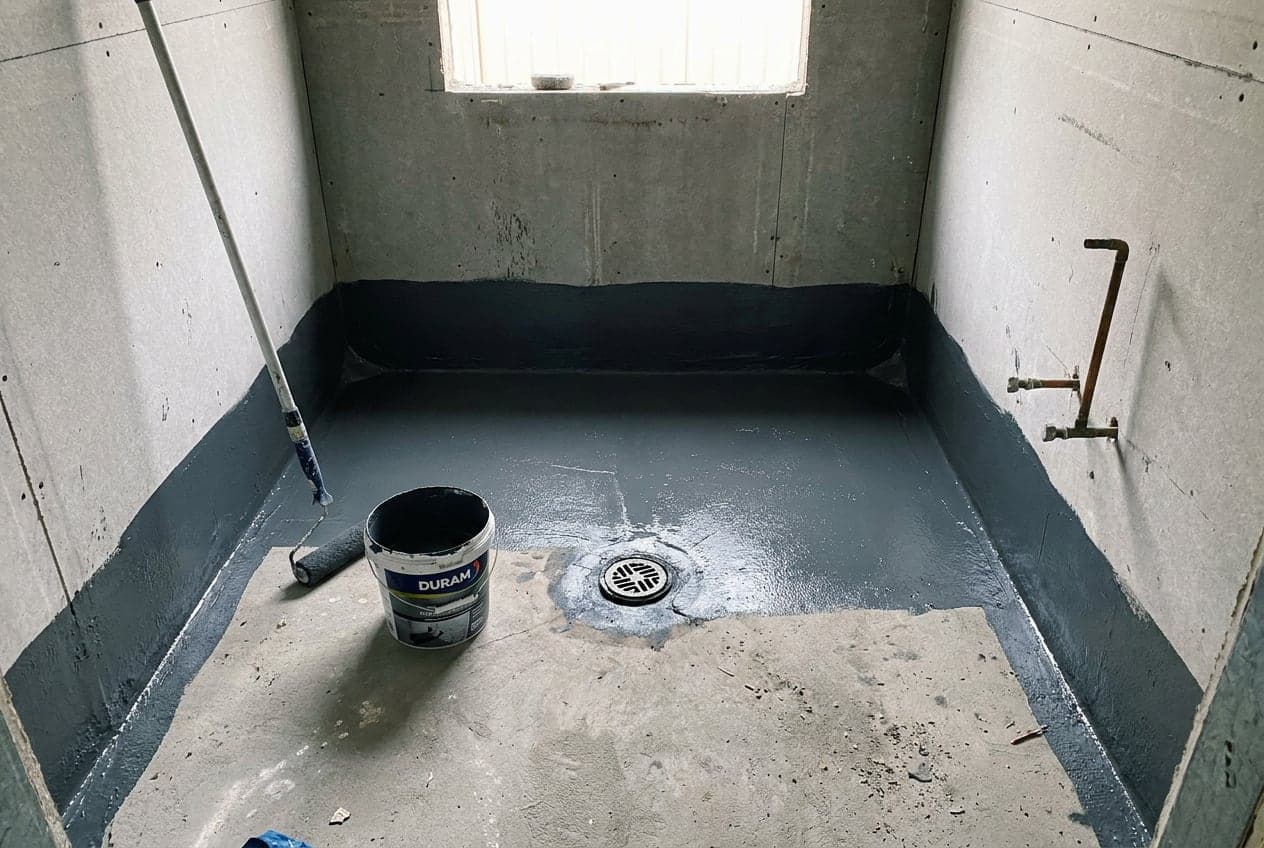
When your bathroom's finished, waterproofing is the one thing you can't see. It sits behind the tiles and under the floor, completely hidden. And yet it's the part that decides whether your renovation lasts for decades or turns into a slow, expensive disaster. Here's what actually goes into it, and why it's worth getting right the first time.
What waterproofing actually is
Tiles and grout are not waterproof. Water passes straight through grout lines over time, which is why every wet area needs a waterproof membrane underneath. It's a flexible, liquid-applied barrier that's rolled or brushed onto the floor and walls before any tiling begins. Once it cures, it forms a continuous skin that keeps water where it belongs and out of your timber, plaster and framing.
Why the prep matters more than the paint
A membrane is only as good as the surface it goes onto. Before a drop of it is applied, the substrate has to be sound, clean and dry, joints and corners need to be sealed, and floor wastes and pipe penetrations have to be treated carefully — these are the spots that leak first. Bond breakers go into the internal corners so the membrane can flex with the building's natural movement instead of tearing. Rushing this stage is where most failures start.
It has to cure before tiling
Waterproofing needs time to fully cure before tiling can start — usually a couple of coats with drying time between each, then a final cure. This is one of the reasons a proper bathroom renovation takes a few weeks rather than a few days. If someone's tiling over a membrane the same day it went down, that's a corner being cut you'll pay for later.
It's a compliance issue, not just a quality one
In NSW, waterproofing of wet areas has to meet the relevant Australian Standards, and it's work that should be documented. A proper renovator will waterproof to standard and keep the paperwork — which matters if you ever sell the home or need to make a claim. If a renovator is vague when you ask how they handle waterproofing, treat that as a red flag.
What poor waterproofing looks like later
- Loose or drummy tiles, especially in the shower base.
- A musty smell that never quite goes away.
- Swollen skirting boards or paint bubbling on the other side of a wet wall.
- Water stains appearing on the ceiling of the room below.
By the time these show up, the fix usually means pulling the bathroom apart again — which is why doing it properly the first time is always cheaper than doing it twice.
The bottom line
Good waterproofing is invisible, and that's exactly the point. It's not glamorous and it never gets photographed, but it's the foundation everything else sits on. At HBN Constructions we waterproof every job to standard because we're the ones who'd have to come back if we didn't. If you're planning a bathroom renovation in the Illawarra and want it done right from the membrane up, get in touch for a free, no-obligation quote.