
Shower Niche or Corner Shelf? Decide Before the Tiler Starts
By Harley Newton · Aug 16, 2026 · 3 min read
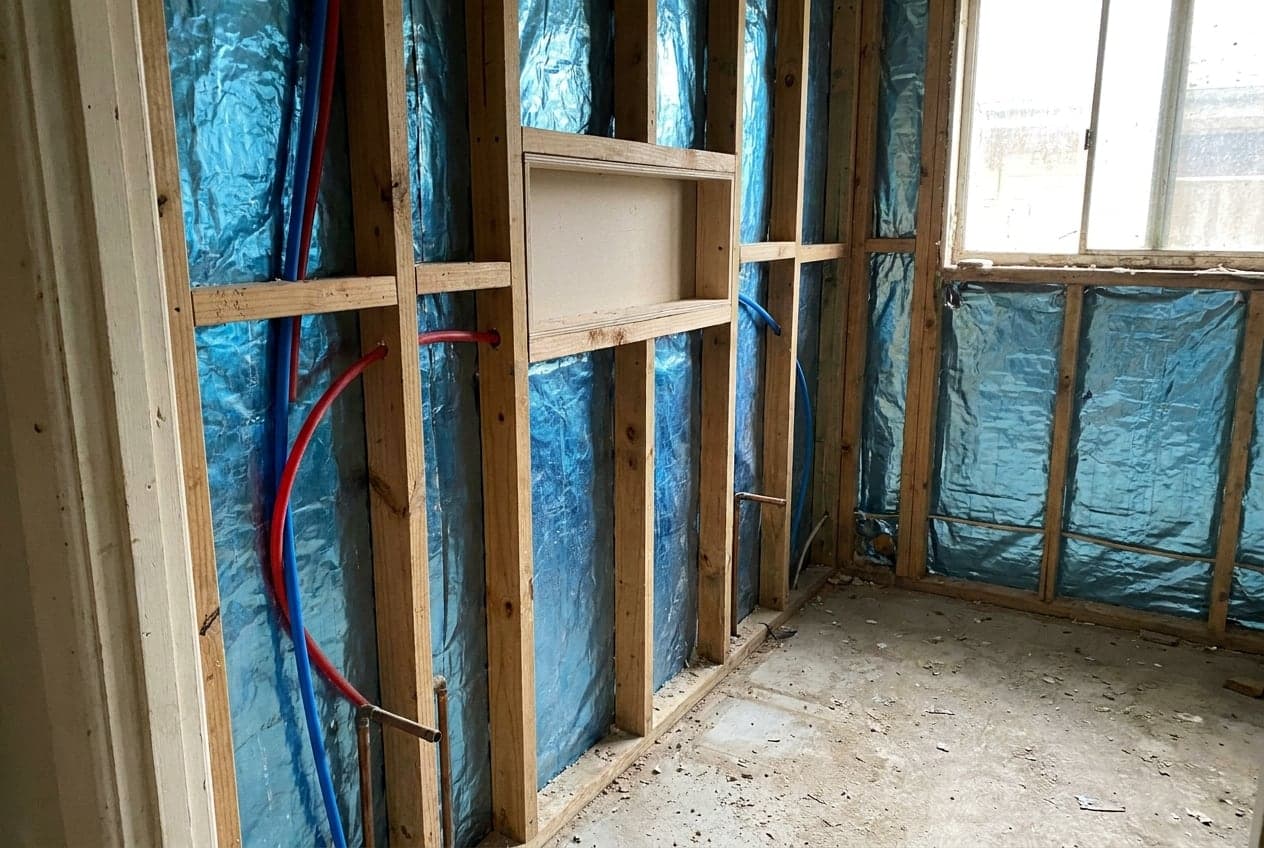
Somewhere between choosing tiles and choosing tapware, most people stop thinking about where the shampoo actually goes. It seems like a small detail to leave until later. It isn't — because a recessed niche has to be built while the wall is still open, and once the walls are sheeted, waterproofed and tiled, that window has closed.
What a niche actually is
A shower niche is a recess built into the wall cavity itself — framed up between the studs, sheeted, waterproofed and then tiled in as part of the wall. Done properly it sits flush with the surrounding tiles. There's nothing sticking out to knock an elbow on, nothing to rust, and nothing that drops off the wall in two years' time.
Why it has to be decided early
This is the part that catches people out. Once the wall linings are on and the waterproofing has gone down, adding a niche means cutting back into a finished, waterproofed wall — and that section then has to be made good and re-waterproofed before any tiling happens. It's neater, faster and far less fuss to form it at framing stage. That's why we ask about niches early, before the walls close up.
A few things decide where a niche can actually go:
- Stud spacing — a niche sits in the gap between studs, so anything wider means altering the framing.
- Pipes and wiring already running through that wall, which can't simply be shifted across to suit.
- External walls, where insulation and less available wall depth limit how deep the recess can be.
- Which side of the shower you actually reach from while you're standing under the water.
When a shelf is the better answer
Not every shower needs a niche. If the wall depth isn't there, or the only sensible wall is full of services, a tiled-in corner shelf does the same job without opening up the cavity. It's a genuinely good option rather than a consolation prize, and it can be set at exactly the height you want.
- Tiled-in corner shelf: formed as the tiling goes up, permanent, and needs no wall cavity behind it.
- Stone or metal shelf fixed after tiling: quick to add, but the fixings pass through the tile and the waterproofing behind it, so placement needs care.
- Hanging caddies and suction hooks: the ones that end up on the floor at six in the morning.
The details worth getting right
- Height: roughly shoulder height, so you're not bending down with your eyes shut.
- One generous niche usually beats two small ones.
- A slight fall on the base so water runs out instead of sitting in the bottom.
- Line the niche up with the tile joints — one that lands mid-tile always looks like an afterthought.
- Measure a real shampoo bottle before settling on the height. They're taller than people expect, and a pump-top bottle taller again.
None of this is complicated. It just has to be decided at the right moment, while the walls are still open and changing your mind costs nothing but a conversation. If you're planning a bathroom in the Illawarra and you're not sure what your walls will allow, we're happy to talk it through before anything gets sheeted up.