
Wall-Hung or Floor-Standing Vanity? How We Help Clients Choose
By Harley Newton · Nov 21, 2026 · 3 min read
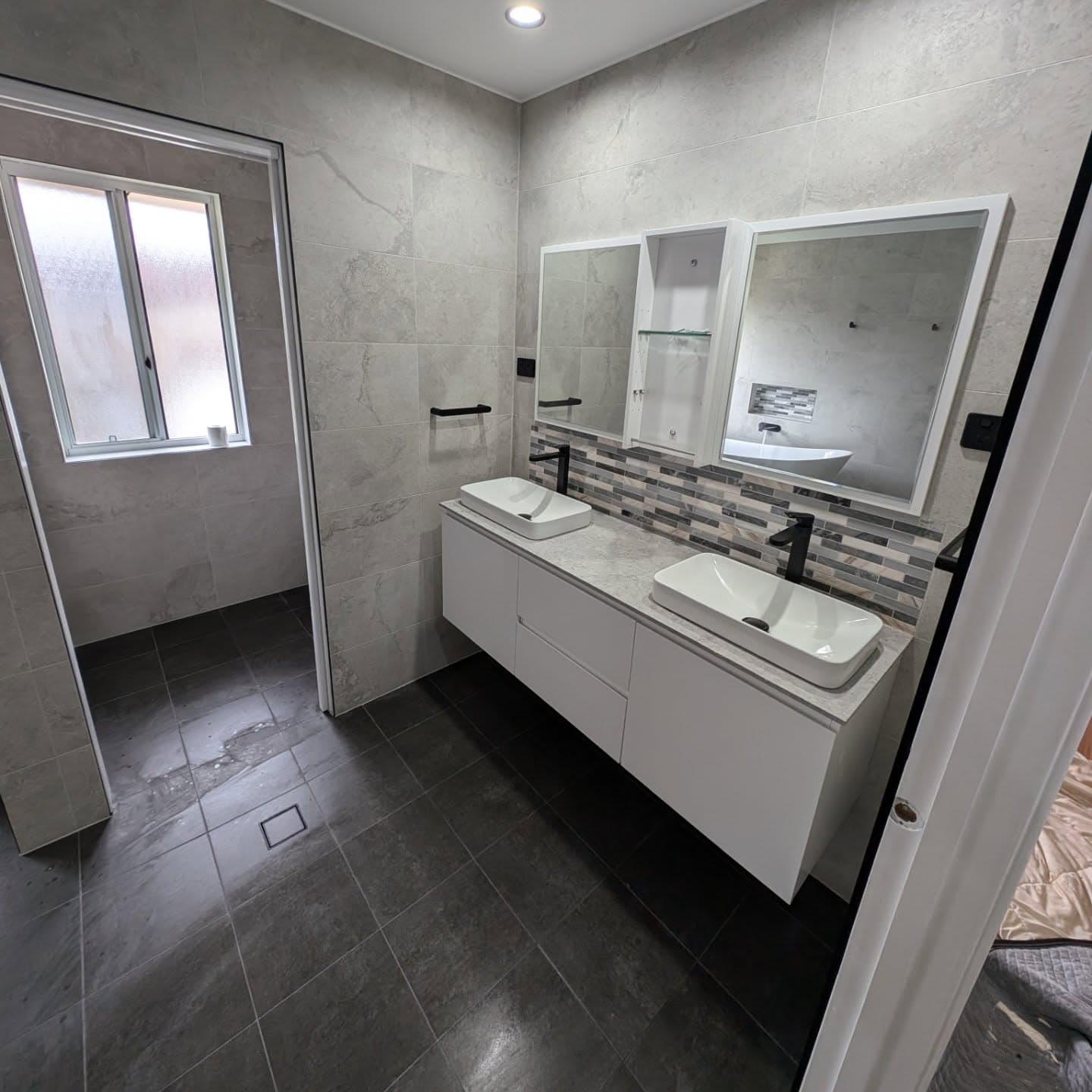
The vanity is usually the first thing you see when you open a bathroom door, and it's the piece you use more than anything else in the room. So it's worth more thought than just picking a colour. One of the first questions we ask is a simple one: do you want it hung on the wall, or standing on the floor?
We fit a lot of wall-hung vanities and we like them. But neither type is the right answer every time, and the choice affects work that happens long before the vanity arrives.
Why wall-hung vanities are so popular
A wall-hung vanity is fixed to the wall with a clear gap underneath. That gap does more than you'd expect.
- The floor tiles run right through to the wall, so your eye reads more floor and the room feels larger. In a small bathroom or ensuite that makes a real difference.
- Cleaning is easier. A mop goes straight underneath, and there's no kickboard or set of legs for dust and water to collect around.
- The height is set to suit you. Because it isn't sitting on the floor, we can mount it at the bench height that's comfortable for the people who use it.
- It suits the cleaner, lighter look most people are after in a modern bathroom.
What a wall-hung vanity needs behind the tiles
This is the part most people don't see. A wall-hung vanity, with a stone top, a basin, full drawers and someone leaning on it, puts all of its weight on the wall. That wall has to be ready for it.
On a timber-framed wall, we fit solid timber noggins between the studs at the right height before the wall is sheeted, so the fixings go into something substantial rather than just wall lining. The plumbing matters too. The waste and water lines need to come out of the wall, not up through the floor, and at a height that hides neatly inside the cabinet. If the existing waste comes up through the floor, it needs to be moved while the room is stripped out.
None of this is difficult when it's planned. It's just much easier to do at the rough-in stage than to work around after the walls are waterproofed and tiled. That's why we ask about the vanity early.
When floor-standing is the better call
A floor-standing vanity isn't the second-best option. There are plenty of rooms where it's the smarter choice.
- Storage. A cabinet that runs to the floor simply holds more, which matters in a family bathroom or a home that's short on cupboards.
- Existing plumbing. If the waste comes through the floor and you'd rather not move it, a floor-standing unit covers it without extra work.
- The wall itself. Some walls in older homes aren't well suited to carrying a hung cabinet without extra work, and a unit that carries its own weight avoids the question.
- Style. A furniture-style or shaker vanity on legs can look right at home in a character house where a floating box would feel out of place.
A few details that matter either way
Whichever way you go, drawers are generally more useful than doors, because you can see and reach everything without kneeling. Leave enough clearance beside the toilet and the shower screen so the room doesn't feel squeezed. And choose the vanity before the tiling starts, not after, because its width and height decide where the plumbing, power points and mirror all go.
If you're weighing it up for your own bathroom, we're happy to look at the room and talk through what suits the wall, the plumbing and the way you use the space. Get in touch for a free quote.